
Spruce cones and the spirit of spring
The idyllic scene of the traditional courtyard at Loma-Vietonen unfolds before your eyes at the end of the sandy track. The warmth of spring has melted away even the last patches of snow in the shady spots, and everything is turning green. The sounds of nature – the chirping and rustling – welcome you into the holiday spirit in the embrace of nature.
Jo Vietonen’s former landlady used to prepare meals for her guests with her own hands, using produce from the surrounding countryside. The traditional ways of making the most of Lapland’s pure, natural ingredients have been passed down to the current hostess, Tuija, and guests at the holiday village are treated to locally sourced food prepared with love. Delicious local food, beautifully presented in a unique setting, is an essential part of the charm of Loma-Vietonen.
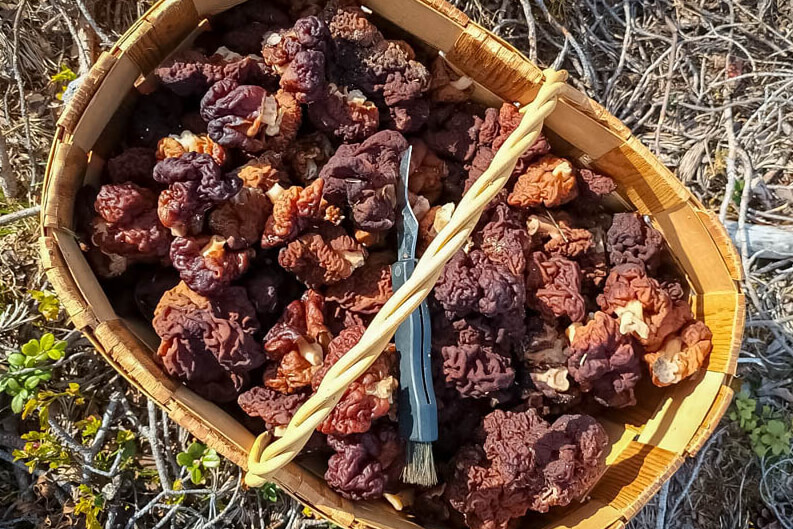
In spring, the dining table still features preserved produce from the previous harvest. The last of the jams, juices and marmalades, made in the autumn, are brought up from the shelves of the earth cellar to the table. There are still plenty of berries picked from the nearby woods in the freezer for desserts and side dishes, whilst chanterelles and other wild mushrooms are used in soups and pies.
Although the actual harvest season is in the autumn, nature’s reawakening after winter provides the perfect opportunity for springtime explorations: those familiar with the area may well find plentiful patches of wood ear mushrooms right on the outskirts of Loma-Vietonen. After careful preparation, Tuija uses this precious ‘forest gold’ to make a creamy wood ear mushroom soup for her guests to enjoy.
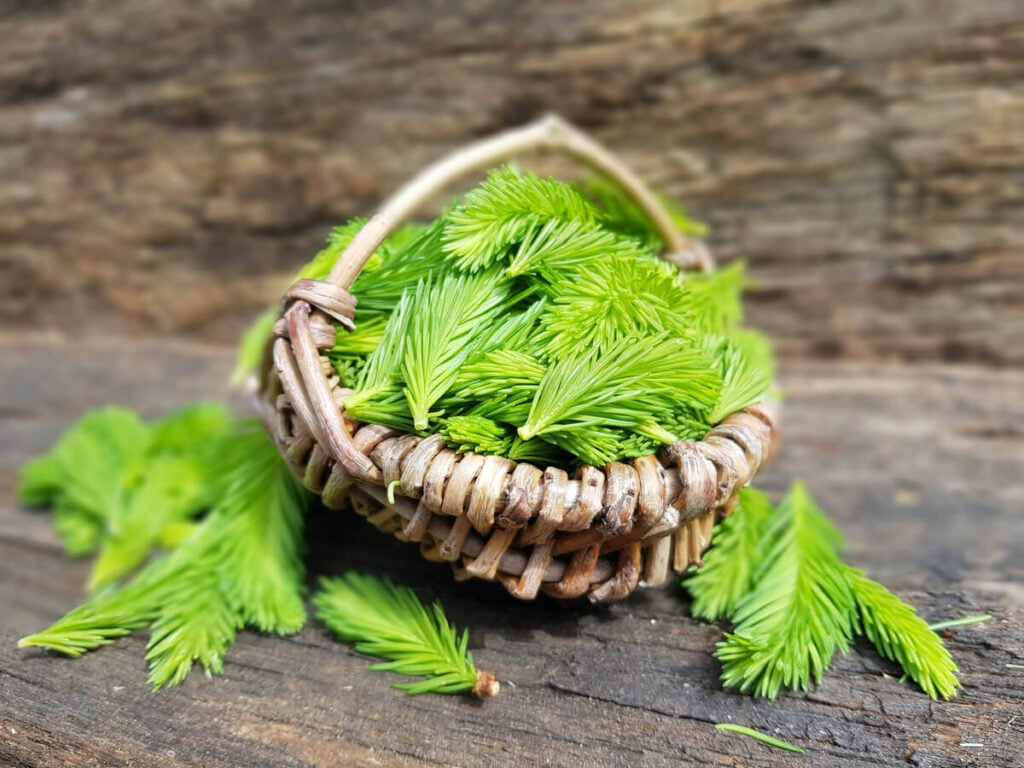
From the very start of spring, Lapland’s unspoilt natural environment also offers a wide variety of medicinal plants and wild herbs. The main ingredients for spruce tip syrup, which is widely used at Vietos, can be found right in the garden. Spruce tips are not covered by everyman’s rights; they may only be gathered from land you own or with the landowner’s permission. Tuija makes the syrup in the spring and serves it in her summer café as a sweetener for tea. The syrup also adds the finishing touch to the festive cranberry sorbet occasionally on offer and provides a natural base for various welcome drinks. When a summer cold strikes, you can simply pop a spoonful of the syrup straight into your mouth – the medicinal properties of spruce tips help to relieve cold symptoms.
So what does local food mean to those who live in the heart of it? It is a natural part of everyday life and features in every meal. Local food is about purity, an appreciation of food and responsibility. Tuija explains that, as well as using produce they have gathered themselves, Vietonen uses a lot of food produced and grown nearby: the zander from Lake Miekojärvi, which forms the centrepiece of their fish dishes, and the fish fillets for their popular pike patties are bought from a local fisherman. Reindeer meat comes either from their own reindeer or from a nearby farm. Tuija also buys some of the berries needed throughout the year from local foragers.
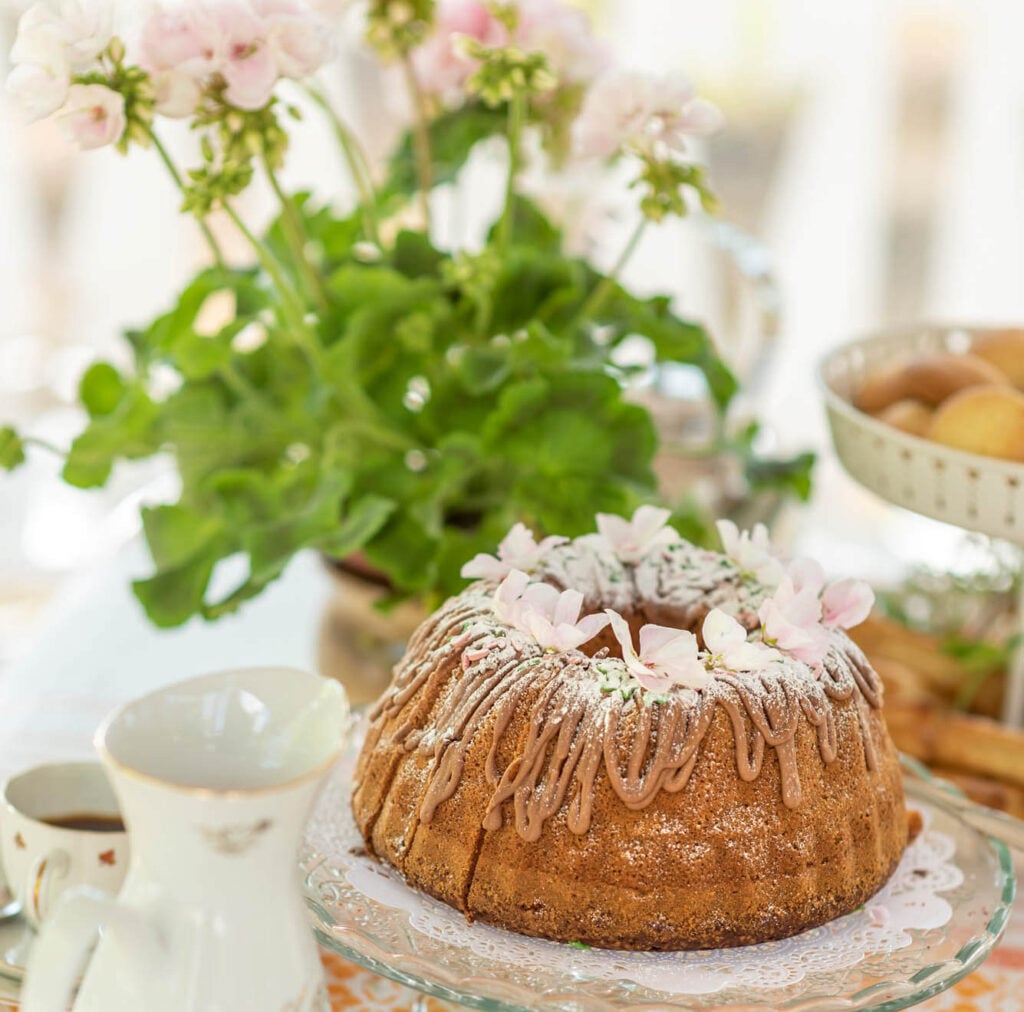
A springtime coffee break is enjoyed in the romantic gazebo in the courtyard of Loma-Vietonen. Tuija brings homemade savoury and sweet pastries to the table. Spruce tip syrup is poured into the tea from a jug decorated with a floral pattern.
Spruce bud syrup
5–6 litres of spruce tips
water
about 1 kg of sugar
Rinse the spruce tips and place them in a saucepan.
Pour in enough cold water to just about cover the grains. Leave to soak overnight.
Boil the barley in its soaking water for about 2 hours, or until the liquid has reduced to half its original volume.
Strain the mixture. At this stage, there should be 1½–2 litres of liquid left.
Add sugar at a rate of about ½ kg per litre of stock. Boil the mixture for a couple of hours. Stir occasionally to prevent the stock from burning at the bottom. The longer you boil it, the thicker the syrup will be.
You can flavour the finished syrup with, for example, lemon juice or vanilla.
Pour the hot syrup into the heated glass jars. Close the lids.
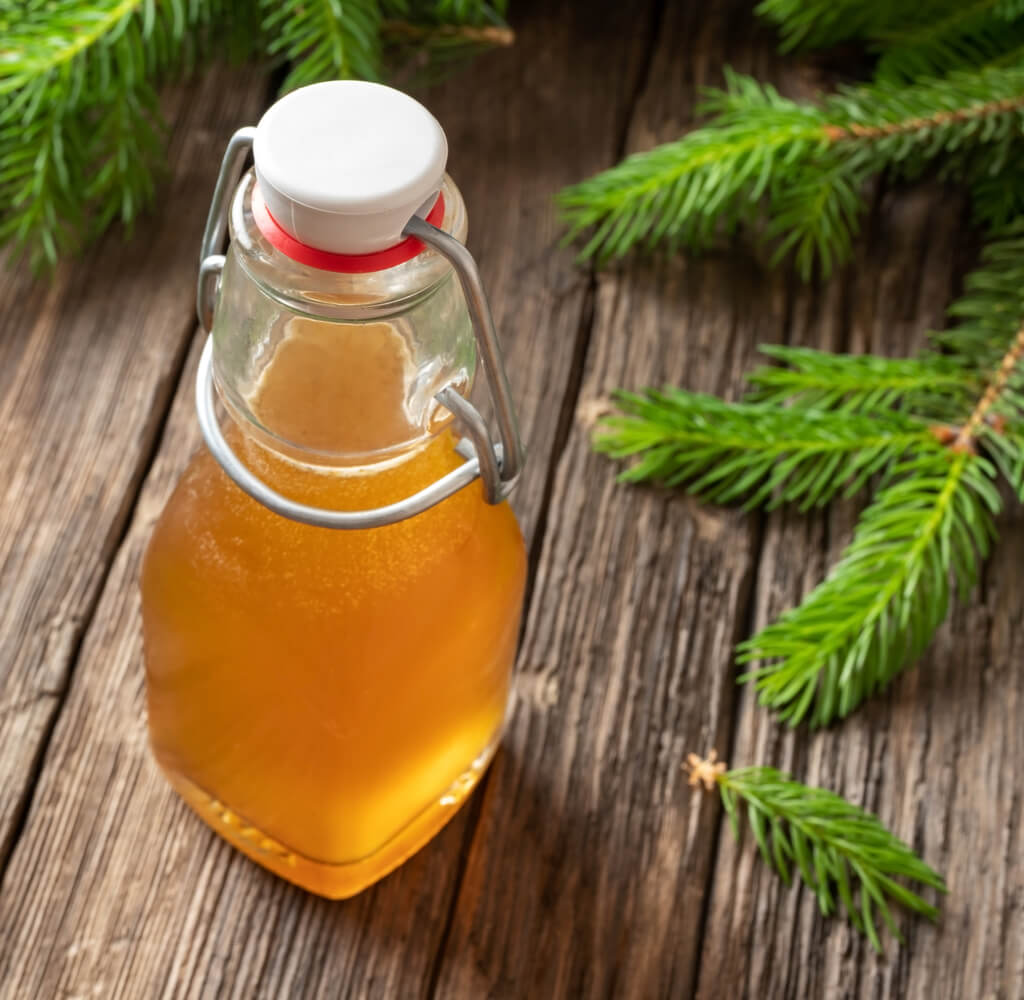
The finished syrup is reddish-brown. It can be served as a sauce, for example with ice cream and berries, or as an accompaniment to game dishes. It can also be used to flavour quark and cream-based desserts and to sweeten drinks. Store in the fridge.